 khoji park
AI · Seoul · 2016
The Move That Looked Like a Mistake
A surprising stone placement changed a match. A human answer made it more interesting.
 Read in slides
1. A very human challenge
In March 2016, South Korean Go champion Lee Sedol faced DeepMind’s AlphaGo in Seoul. The five-game match tested an artificial-intelligence system against one of the game’s finest players. A board with simple rules offered a vast range of possible positions and choices.
The equipment was ordinary. The opponent was not.
2. A board full of possibilities
Go offered a clear result but an enormous space of possible decisions. The rules could be written down much more easily than a winning strategy. For the people watching the match, that difference made each unfamiliar move important: it might be a mistake, or something the observers had not yet understood.
The board did not explain the move immediately.
3. Learning before the match
AlphaGo combined neural networks with search. It had studied human games and improved through self-play. This was not a program manually supplied with every move it would make. Training had produced a system that could evaluate positions and explore possible continuations on its own.
Knowing the rules did not mean anyone had written the next move.
4. Move thirty-seven
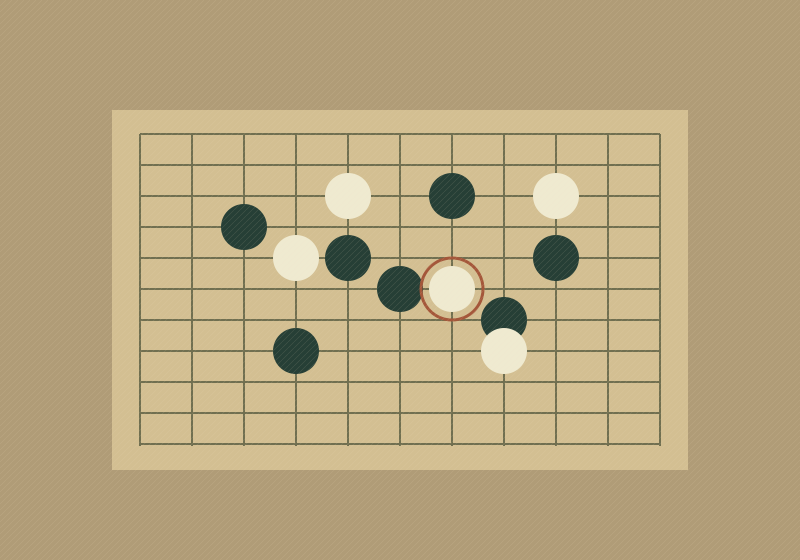
In the second game, AlphaGo placed a stone in a position that surprised expert observers. Move 37 became the match’s most famous computer move. What initially looked unconventional developed into an important part of a winning game. Familiar expectations were proving an unreliable guide to the machine’s choices.
The strange-looking move was not waiting for anyone’s approval.
5. Three games down
AlphaGo won the first three games and secured the match. There were still two games to play. The remaining contest was no longer about who would win the series, but whether Lee could find a response that exposed a weakness in the system across the board.
The result was settled. The interesting part was not over.
6. The human surprise
In game four, Lee’s move 78 helped turn the game in his favour. AlphaGo lost. The player had found a remarkable answer to the system that had beaten him three times. The match now contained two memorable surprises, and the machine had supplied only one of them.
The most discussed intelligence at the board was human again.
7. The human answer
Lee Sedol's victory in one game mattered because the contest was taking place against an unusually strong opponent. It was a concrete result within the match, rather than a claim that every machine had been defeated. The series could contain a major technical success and a memorable human recovery together.
One result could still change the conversation.
8. A score, not a prophecy
AlphaGo won the final game, ending the series four to one. The result was a major achievement in a particular, demanding game. It also gave players new ideas to examine. Neither the machine’s victory nor Lee’s win required treating the match as proof of unlimited intelligence.
The score was clear. What people could learn from it kept expanding.