 khoji park
Space · Lake Tengiz, Kazakhstan · 1976
The Space Capsule Landed in a Frozen Lake
A docked approach failure forced an emergency return, ending in an accidental splashdown in a blizzard.
 Read in slides
1. Mission Launch
Soyuz 23 launched on October 14, 1976, carrying cosmonauts Vyacheslav Zudov and Valery Rozhdestvensky on a scheduled mission to the Salyut 5 space station. The flight represented the second crewed visit to the orbiting laboratory. Crew members underwent extensive training for mission operations, though automated systems played a primary role during the rendezvous phase. Controllers monitored telemetry as the spacecraft approached the station.
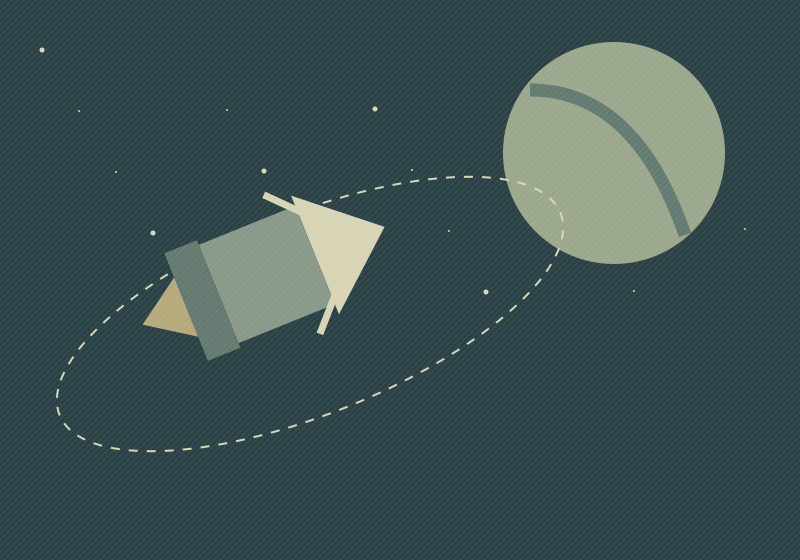
The spacecraft entered proximity range of the Salyut 5 orbital station.
2. Docking Failure
On October 15, 1976, the automated approach system malfunctioned before the spacecraft came within 100 meters of the station. Crews had been trained for manual docking procedures but lacked training for a manual approach sequence. Because the automated system failed to establish a stable connection, mission controllers ordered the flight to be abandoned. The early termination required an immediate return to Earth.
The crew prepared the spacecraft for an emergency orbital departure.
3. Power Conservation
The spacecraft operated on limited battery power that restricted mission duration to approximately two days. To conserve electrical energy during the return preparations, the crew powered down non-essential systems, including the radio transmitters. Waiting for the designated landing window near the Baikonur Cosmodrome, the cosmonauts maintained minimal operational status. The power shutdown left the descent module with limited interior illumination.
The descent module prepared for atmospheric re-entry under power-saving protocols.
4. Blizzard Landing
Soyuz 23 returned to Earth on October 16, 1976, landing at 17:45 UTC amidst severe winter weather conditions. The capsule touched down on the partially frozen surface of Lake Tengiz, situated eight kilometers from shore in Kazakhstan. A heavy blizzard produced dense fog and sub-zero temperatures reaching minus 22 degrees Celsius. This marked the first accidental water landing in the history of the Soviet crewed space program.
The capsule settled onto the surface of the freezing lake.
5. Submerged Capsule
Upon water impact, the parachute quickly became waterlogged and sank beneath the surface, dragging the capsule underwater. An electrical short circuit triggered the accidental deployment of the reserve parachute. The weight of the waterlogged parachutes pulled the descent module onto its side, blocking the exit hatch. Furthermore, the communication antennas were submerged, preventing the transmission of radio signals to recovery teams.
The crew remained trapped inside the submerged and darkened module.
6. Suspended Rescue
Rescue helicopters and search teams struggled to locate the capsule in the heavy fog and blowing snow. Rubber rescue rafts were blocked by floating ice sludge, while amphibious vehicles became stuck in surrounding bogs. Because the capsule beacons remained invisible and communication was impossible, rescue operations were suspended until dawn. Inside the module, the cosmonauts removed their pressure suits and donned normal flight suits to conserve warmth.
The rescue teams withdrew temporarily while the crew awaited daylight.
7. Morning Extraction
At dawn on October 17, frogmen were deployed from helicopters to attach flotation collars to the Soyuz craft. The capsule proved too heavy for direct helicopter lifting, so recovery vessels dragged it toward the shore. Eleven hours after splashdown, recovery crews opened the hatch. Assuming the cosmonauts had succumbed to the freezing conditions, teams initially prepared to remove bodies from the module.
Rescue personnel accessed the interior of the descent module.
8. Safe Recovery
The rescue operation eventually brought the Soyuz 23 capsule to shore with both cosmonauts alive. Darkness, cold and the partly submerged spacecraft had complicated the response after an unplanned landing on Lake Tengiz. The crew had not completed the intended station mission, but the water landing did not end in their deaths. Recovery crews had to solve the landing emergency before the capsule could be opened safely.
The capsule reached shore with both cosmonauts alive.