 khoji park
Robbery · Baker Street, London · 1971
The Robbery Someone Heard Live
One listener knew a bank was being burgled. The problem was finding which one.
 Read in slides
1. An unexpected programme
In September 1971, amateur radio enthusiast Robert Rowlands picked up conversations that were not intended for him. Men were discussing a burglary as it unfolded. Rowlands could listen to the crime, but the voices did not conveniently announce a street address. He was hearing an extraordinary broadcast without knowing exactly where it originated.
The reception was clear. The location was the problem.
2. A bank with an underground visitor
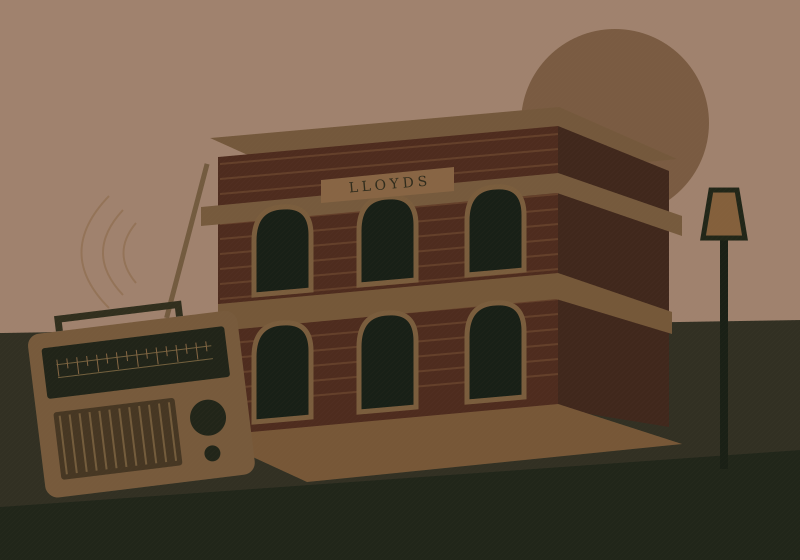
The target was a Lloyds Bank branch on Baker Street in London. The gang had approached through a tunnel from nearby premises rather than relying on the bank’s usual entrance. Safe-deposit boxes were their objective. The closed street-level frontage did not reveal the activity beneath it.
At this bank, the quiet exterior was telling the wrong story.
3. A warning that needed an address
Rowlands contacted police and recorded the transmissions. He was trying to turn a disturbing conversation into an effective warning. Yet hearing evidence of a crime and locating it were different tasks. Officers had to decide how to respond to voices describing an unseen operation somewhere in the surrounding area.
He had found the burglars’ channel, not their front door.
4. Two sides of the same weekend
The robbers were communicating with their lookout over radio. Rowlands continued listening as efforts to establish the source developed. For the gang, the weekend offered time inside a bank closed to customers. For their unintended listener, each further transmission meant that the opportunity to stop them was still slipping away.
Their communications were helping the job—and broadcasting its existence.
5. So close, still outside
Accounts describe police checking banks, including the Lloyds branch, without discovering the vault burglary in time. A secure-looking door could conceal a very different situation on its far side. The missed opportunity is central to the incident: a crime had been reported while it was happening, yet the report had not become an interception.
Sometimes arriving at the right building still means missing the story.
6. Monday supplies the answer
When the bank reopened, the damage was unmistakable. Safe-deposit boxes had been looted. What Rowlands had been trying to explain over the weekend now had a location and a crime scene. The uncertainty about the voices was replaced by a major investigation into the people responsible for the tunnel and theft.
The mystery had finally acquired an address—after the burglars left.
7. The investigation catches up
Four men were later convicted in connection with the burglary. The robbery’s notoriety also attracted sensational rumours and, decades later, a film treatment. Those additions should not be confused with what the documented case establishes. The radio interception and the failure to stop the theft are remarkable enough without borrowing a screenplay.
The real case did not need fictional extras to become astonishing.
8. A broadcast nobody requested
Baker Street is remembered for a striking contradiction: a bank burglary was overheard while in progress, yet the gang still got away from the scene. Rowlands had done something unusual by listening and raising the alarm. The story is about that gap between knowing something is wrong and knowing where to act.
A live crime broadcast, unfortunately, came without a location pin.