 khoji park
Robbery · Acassuso, Buenos Aires · 2006
Surrounded—and Still Gone
The police had the building surrounded. The robbers had another idea of an exit.
 Read in slides
1. A bank full of hostages
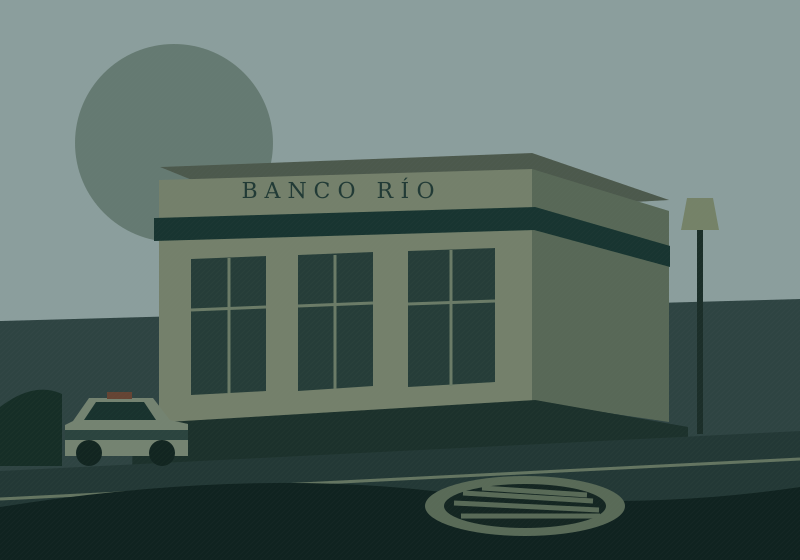
On 13 January 2006, robbers entered the Banco Río branch in Acassuso, in the Buenos Aires area. Employees and customers became hostages. Police surrounded the building. For the people caught inside, the danger was real; outside, officers had to respond without knowing exactly what the gang intended to do next.
The visible crisis was only part of the operation.
2. The audience outside
The stand-off drew intense attention. Negotiations and the hostage situation kept police focused on the bank’s occupants and entrances. It looked like the sort of siege whose outcome would eventually be decided at a door. But the gang was also using those hours for something that the police perimeter could not reveal.
Everyone was watching the building. That was useful to the thieves.
3. A second robbery inside the first
While the hostage crisis continued, safe-deposit boxes were being emptied. This was not simply a raid on the cash available across a bank counter. The prosecution later described the hostages as a means of covering the theft from private boxes and gaining time. The public emergency and the concealed objective were happening together.
The siege was buying time for a different kind of withdrawal.
4. The missing direction
The gang had an underground route linking the bank to storm drains. They escaped with money and valuables through that route. The crucial contrast was brutally simple: police had surrounded the place above ground, while the exit that mattered lay beneath it. A perimeter could not protect a dimension it had not secured.
The way out did not look like an exit from the street.
5. An ending without an arrest at the door
The hostages survived the episode, but the robbers were gone. What had looked like a trap around the gang had not delivered the expected surrender. The escape became a central reason the case acquired its famous “robbery of the century” label. The performance had ended; the investigation was only beginning.
They had escaped the bank. Escaping the case was a separate problem.
6. A headline meets a courtroom
Four defendants were found guilty in 2010. The later sentencing report named prison terms ranging from nine to fifteen years. Those were findings in a real criminal proceeding, rather than the triumphant final scene of a caper film. Behind the colourful retellings were frightened hostages, stolen belongings and years of police and legal work.
A clever escape route does not lead around a criminal conviction.
7. The detail that gets oversimplified
Toy weapons left at the scene became a memorable part of the story. But the 2010 sentencing coverage also reported a judicial finding about operable firearms. That makes “they only used toy guns” an unsafe shortcut. The most entertaining version of a famous robbery is not automatically the most accurate one.
Even this story has a trapdoor: the version that sounds too neat.
8. Surrounded was not the same as caught
Banco Río illustrates the difference between controlling what can be seen and understanding what is happening. The gang used the drama upstairs to conceal a theft and escape below. Four men later faced convictions. The incident remains remarkable without granting the robbers imaginary powers or turning the hostages’ experience into a joke.
The police had the address. For a while, the thieves had the plot.